

If you are planning a trip to Guinea and wondering whether you can simply show up and get a visa at the airport, this guide has the answers. The short version: Guinea’s visa on arrival is extremely limited – available only to UAE nationals. Everyone else must apply for an eVisa before departure.
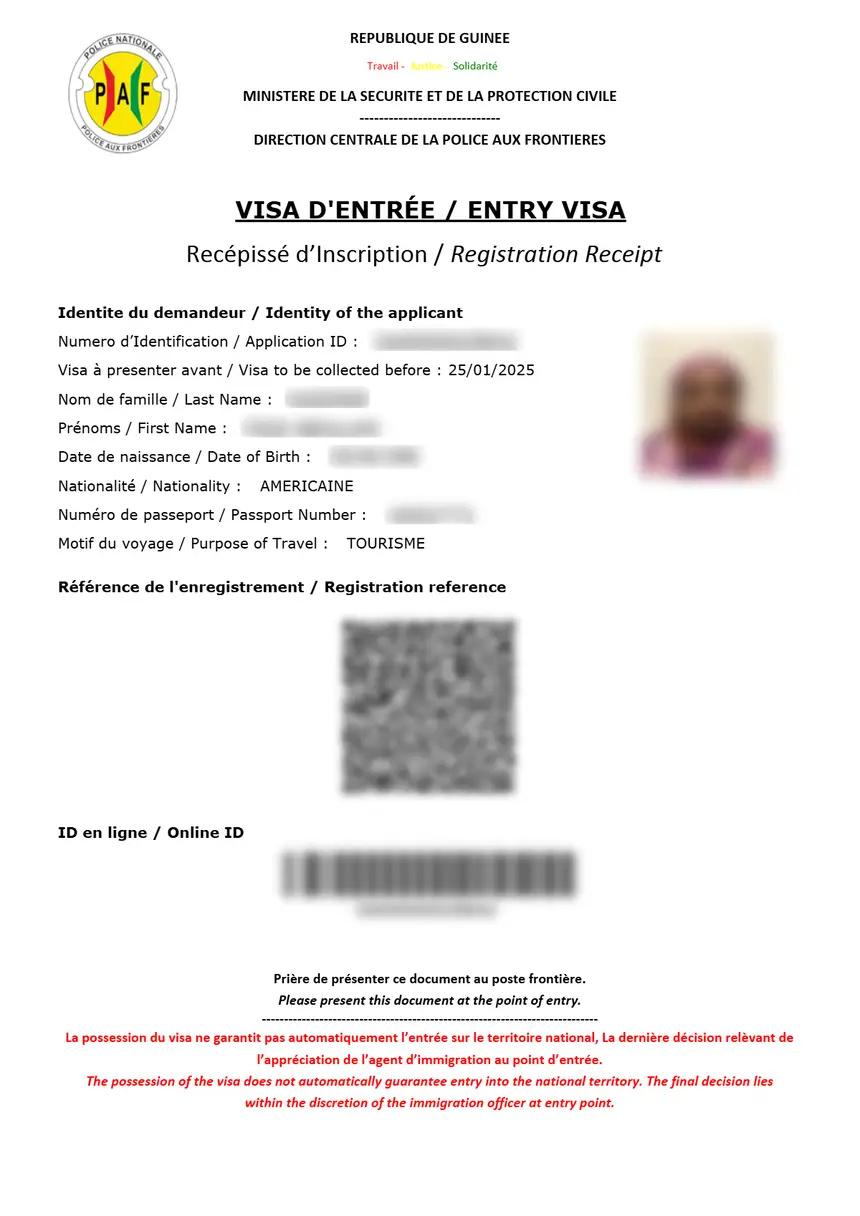
This article explains exactly who qualifies for a Guinea visa on arrival, how the process works, and why applying for the eVisa online is the smarter choice for the vast majority of travelers.
What Is a Guinea Visa on Arrival?
A visa on arrival (VOA) is a type of entry visa that travelers can obtain after landing at their destination, rather than securing one before departure. In many countries, the VOA process involves filling out a form at the airport, paying a fee, and receiving a visa stamp on the spot.
Guinea does technically offer a visa on arrival – but with a major caveat. The option is restricted almost exclusively to citizens of the United Arab Emirates (UAE). For all other nationalities, the Guinea government has transitioned to an electronic visa (eVisa) system as the standard entry method.
This means that if you are a citizen of the United States, United Kingdom, India, France, China, Nigeria (non-ECOWAS transit), or virtually any other country, you should not plan on getting a visa at the airport. Airlines flying to Conakry will typically check for visa documentation before allowing you to board.
Who Can Get a Guinea Visa on Arrival?
The eligibility for a Guinea visa on arrival is narrow:
| Nationality | Visa on Arrival Available? |
|---|---|
| UAE citizens | **Yes** – eligible for VOA |
| ECOWAS member states | **No visa needed** – visa-free entry |
| Algeria, Cuba, Morocco, Tunisia, Turkey | **No visa needed** – visa-free entry |
| United States | **No** – must apply for eVisa |
| United Kingdom | **No** – must apply for eVisa |
| India | **No** – must apply for eVisa |
| France | **No** – must apply for eVisa |
| China | **No** – must apply for eVisa |
| All other nationalities | **No** – must apply for eVisa |
If you are a citizen of an ECOWAS member state (Nigeria, Senegal, Mali, Ivory Coast, Ghana, Burkina Faso, Togo, Benin, Sierra Leone, Liberia, Gambia, Guinea-Bissau, Niger, Cape Verde), you do not need any visa at all. You can enter Guinea visa-free with a valid ECOWAS passport and a yellow fever vaccination certificate.
Several other countries also have visa-free arrangements with Guinea, including Algeria, Cuba, Morocco, Tunisia, Turkey, South Africa, and Rwanda. Citizens of these nations can enter without a visa for the permitted duration of stay.
For everyone else – which is the vast majority of international travelers – the eVisa is the only viable option.
How Does Guinea Visa on Arrival Work?
For UAE nationals who are eligible, the visa on arrival process at Conakry International Airport (CKY) generally follows these steps:
- Arrive at Conakry International Airport – Proceed to the visa-on-arrival counter before the immigration checkpoint
- Fill out the application form – Provide personal details, passport information, purpose of visit, and accommodation details
- Present required documents – Valid passport (at least 6 months validity), yellow fever vaccination certificate, return/onward ticket, and proof of accommodation
- Pay the visa fee – Payment is typically in cash (USD or Guinean Franc)
- Receive your visa stamp – The immigration officer processes your visa and stamps your passport
Important: The visa on arrival process is subject to immigration officer discretion. Even eligible travelers can be denied if documentation is incomplete or if there are security concerns. There is no guarantee of approval, unlike the eVisa which provides pre-travel authorization.
Limitations of Visa on Arrival
- No pre-approval – You will not know if your visa is approved until you arrive
- Airlines may deny boarding – Carriers often require proof of visa before allowing passengers to board flights to Guinea
- Long wait times – VOA counters can have significant queues, especially during peak hours
- Cash payment – May require exact change in specific currencies
- Limited availability – Not guaranteed to be operational at all entry points
Guinea Visa on Arrival vs eVisa
Understanding the differences between these two options helps you make the right choice:
| Feature | Visa on Arrival | eVisa |
|---|---|---|
| **Who can apply** | UAE nationals only | All nationalities requiring a visa |
| **When to apply** | At the airport after landing | Before departure (online) |
| **Processing time** | On the spot (variable) | 3-4 business days |
| **Guaranteed entry** | No – subject to officer discretion | Yes – pre-approved before travel |
| **Airlines accept it** | May cause boarding issues | Fully accepted |
| **Fee** | Similar to eVisa | $80 USD (tourist), $50 (transit) |
| **Payment method** | Often cash required | Credit/debit card online |
| **Risk level** | Higher – no advance confirmation | Lower – approval secured beforehand |
| **Recommended** | Only if no other option | **Yes – strongly recommended** |
The eVisa is superior in almost every way. It provides certainty before you travel, eliminates airport hassles, and is accepted by all airlines serving Conakry.
Why the eVisa Is the Better Choice
Even for UAE nationals who technically qualify for a visa on arrival, applying for the eVisa in advance is still the smarter move. Here is why:
1. Guaranteed Entry Authorization
With an eVisa, you receive an Entry Visa Letter before your trip. This document confirms that your visa has been approved. You can travel with confidence knowing you will not be turned away at the airport or upon arrival.
2. No Airline Complications
Airlines are increasingly strict about verifying visas before boarding. Without pre-approved documentation, you risk being denied boarding at your departure airport. The eVisa eliminates this risk entirely.
3. Faster Immigration Processing
When you arrive with a pre-approved eVisa, the immigration process is smoother. The officer simply verifies your Entry Visa Letter, stamps your passport, and you are on your way. No forms to fill out at the counter, no waiting for approval.
4. Secure Online Payment
The eVisa fee is paid by credit or debit card through the official portal. There is no need to carry large amounts of cash or worry about having the correct currency upon arrival.
5. Document Verification in Advance
The eVisa application process verifies your documents before you travel. If anything is missing or unclear, you will be notified and can fix the issue before departure. With a visa on arrival, document problems are discovered at the worst possible moment – when you have already flown across the world.
How to Apply for a Guinea eVisa Instead
Applying for the Guinea eVisa is straightforward and takes just a few steps:
Step 1: Visit the Official Portal
Go to paf.gov.gn/visa – the official Guinea eVisa website managed by the Police de l’Air des Frontieres (PAF).
Step 2: Create an Account
Register with your email address and create a password. You will use this account to track your application.
Step 3: Complete the Application Form
Enter your personal information exactly as it appears on your passport:
- Full name
- Date of birth
- Nationality
- Passport number
- Travel dates
- Purpose of visit
- Accommodation details in Guinea
Step 4: Upload Documents
Prepare and upload:
- Passport bio-data page (clear color scan)
- Passport-style photograph
- Yellow fever vaccination certificate
- Flight itinerary
- Proof of accommodation
Step 5: Pay the Fee
| Visa Type | Fee (USD) | Duration |
|---|---|---|
| Tourist (single entry) | $80 | Up to 90 days |
| Transit | $50 | Up to 3 days |
| Business | $100 | Varies |
| Long-term | $150 | Up to 1 year |
Step 6: Wait for Processing
Standard processing takes 3 to 4 business days. You will receive email notifications about your application status.
Step 7: Print Your Entry Visa Letter
Once approved, download and print your Entry Visa Letter. Carry it with your passport and yellow fever certificate when you travel.
For a detailed walkthrough, see our Guinea Visa Application guide.
Guinea Visa on Arrival by Nationality
Here is a quick reference for travelers from the most common origin countries:
United States Citizens
No visa on arrival. US citizens must apply for a Guinea eVisa before travel. The tourist eVisa costs $80 USD. You will also need a yellow fever vaccination certificate. The US Embassy in Conakry recommends enrolling in the STEP program before departure.
United Kingdom Citizens
No visa on arrival. UK nationals must obtain an eVisa through the official portal. The UK Foreign Office advises checking current travel advisories for Guinea before booking.
Indian Citizens
No visa on arrival. Indian passport holders need a Guinea eVisa. Processing may take slightly longer due to additional verification. Ensure your passport has at least 6 months validity from your planned entry date.
French Citizens
No visa on arrival. French nationals must apply for an eVisa. French is widely spoken in Guinea, which makes communication straightforward once you arrive.
Nigerian Citizens
No visa needed. As an ECOWAS member state, Nigerian citizens can enter Guinea visa-free with a valid ECOWAS passport. No eVisa or visa on arrival is required. Carry your yellow fever certificate.
UAE Citizens
Yes – visa on arrival is available. UAE nationals are the primary exception and can obtain a visa upon arrival at Conakry International Airport. However, applying for the eVisa in advance is still recommended for the reasons outlined above.
Frequently Asked Questions
Can I get a visa on arrival in Guinea Conakry?
Visa on arrival in Guinea is only available to UAE nationals. All other travelers requiring a visa must apply for the eVisa online at paf.gov.gn/visa before departure. ECOWAS citizens and citizens of visa-free countries do not need any visa.
Can US citizens get a visa on arrival in Guinea?
No. US citizens cannot get a visa on arrival in Guinea. You must apply for an eVisa online before traveling. The tourist eVisa costs $80 USD and takes 3-4 business days to process. You will also need a yellow fever vaccination certificate.
Which is better – eVisa or visa on arrival for Guinea?
The eVisa is better for almost all travelers. It provides guaranteed pre-approval, eliminates airline boarding issues, speeds up immigration processing, and is available to all nationalities. Visa on arrival is limited to UAE nationals and carries the risk of denial at the airport.
Do I need to apply for a visa before going to Guinea?
Yes, unless you are from a visa-free country (ECOWAS members, Algeria, Cuba, Morocco, Tunisia, Turkey, and others) or hold a UAE passport. The standard process is to apply for an eVisa online at paf.gov.gn/visa at least two weeks before your travel date.
How much does a Guinea visa on arrival cost?
The visa on arrival fee is similar to the eVisa fee – approximately $80 USD for a tourist visa. Payment may be required in cash (USD or local currency). The eVisa fee is paid online by card, which is more convenient.
What documents do I need for a Guinea visa on arrival?
UAE nationals seeking a visa on arrival need: a valid passport (6+ months validity), yellow fever vaccination certificate, return or onward ticket, proof of accommodation, and cash for the visa fee. All other travelers should have an eVisa Entry Visa Letter instead.
Is the eVisa accepted at all entry points in Guinea?
The eVisa is primarily processed at Conakry International Airport (CKY). If you are entering through a land border crossing, confirm in advance that the eVisa is accepted at your specific crossing point. Some remote border posts may have limited processing capability.
What if I arrive in Guinea without a visa?
If you arrive without a valid visa and are not from a visa-free country, you will likely be denied entry and placed on a return flight. Airlines are also fined for transporting passengers without proper documentation, so they actively check visa status before boarding. This is why the eVisa is essential.
Final Recommendation
For the overwhelming majority of travelers, the Guinea eVisa is the only practical option. The visa on arrival is restricted to a very small group of nationalities and comes with significant risks and inconveniences.
Apply for your eVisa at least two weeks before your trip through the official portal at paf.gov.gn/visa. The process is simple, the fee is reasonable at $80 USD for a tourist visa, and you will travel with the peace of mind that comes from having your entry pre-approved.
Do not risk being denied boarding or turned away at immigration. Get your eVisa sorted, print your Entry Visa Letter, pack your yellow fever certificate, and enjoy your trip to Guinea.
This article was last updated in 2026. Visa policies can change without notice. Always verify the latest requirements at the official Guinea eVisa portal before traveling.