

Yes, a yellow fever vaccination certificate is mandatory for all travelers entering Guinea. You must carry the original International Certificate of Vaccination (commonly called the “yellow card”) and present it at the border – digital copies, photos, or photocopies are not accepted. This requirement applies to everyone aged nine months and older, regardless of nationality.
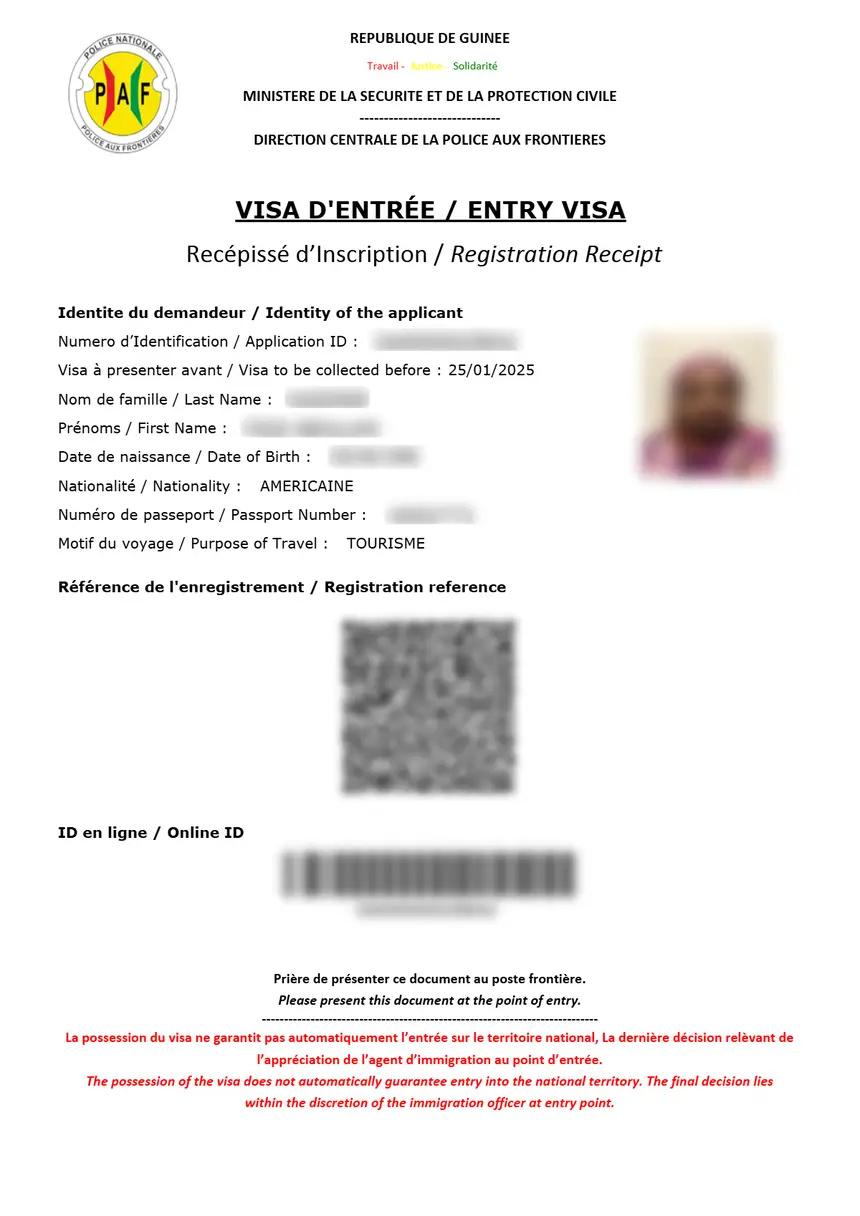
This guide explains everything you need to know about the yellow fever certificate for Guinea: where to get vaccinated, how much it costs, timing requirements, exemptions, and what happens if you arrive without one.
Is the Yellow Fever Certificate Required for Guinea?
Guinea is classified as a yellow fever endemic country by the World Health Organization (WHO). The government requires proof of yellow fever vaccination from all incoming travelers as a public health measure. This rule is strictly enforced at Conakry International Airport and all land and sea border crossings.
The requirement applies to:
- Tourists visiting Guinea on a tourist e-Visa
- Business travelers with a business visa
- Transit passengers passing through Guinea
- Diplomatic passport holders
- Children aged nine months and older
- Citizens of ECOWAS countries and other visa-exempt nationalities
There are no exceptions based on nationality. Even citizens of neighboring countries entering under visa-free agreements must show a valid yellow fever certificate.
What Is the International Certificate of Vaccination?
The International Certificate of Vaccination or Prophylaxis (ICVP) – commonly known as the “yellow card” or “yellow booklet” – is an official WHO document that records your yellow fever vaccination. It is a small yellow booklet that you should carry inside your passport.
Key details about the certificate:
- Issuing authority: The vaccination center or clinic that administers the vaccine
- Format: Small yellow booklet (approximately 10cm x 15cm)
- Content: Your name, date of birth, passport number, vaccine batch number, date of vaccination, and the official stamp and signature of the administering physician
- Validity: Valid for life under current WHO regulations (changed in 2016 from the previous 10-year rule)
- Language: Typically issued in English and/or French, with WHO-standard fields
You do not need to get a new certificate even if your vaccination was administered decades ago. The single-dose lifetime validity rule applies globally.
Where to Get the Yellow Fever Vaccine
Yellow fever vaccines are available only at designated vaccination centers authorized by national health authorities. You cannot get this vaccine at a regular doctor’s office or pharmacy.
In the United States
The CDC maintains a searchable directory of authorized yellow fever vaccination centers. Visit the CDC website and search by state or zip code to find the nearest center. These are typically located at:
- Travel medicine clinics
- Public health departments
- Some hospitals with travel health services
- University health centers
In the United Kingdom
Yellow fever vaccination is available at registered Yellow Fever Vaccination Centres. You can search for your nearest center on the National Travel Health Network and Centre (NaTHNaC) website. Options include:
- GP surgeries registered as yellow fever centers
- Dedicated travel health clinics
- Some pharmacy chains with travel health services
In Other Countries
Contact your national health authority or a travel medicine clinic. Many countries have designated centers listed on their ministry of health website. International travel clinic chains (such as TMB, MASTA, or Passport Health) often have multiple locations.
When to Get Vaccinated
Timing matters. You must get vaccinated at least 10 days before your departure date to Guinea. Here is why:
- The yellow fever vaccine takes approximately 10 days to stimulate sufficient antibody production
- Your certificate is not considered valid until 10 days after vaccination
- Border officials check the vaccination date – arriving before the 10-day window may result in entry denial
Planning tip: Schedule your vaccination appointment at least 2-4 weeks before travel. This gives you buffer time in case the appointment is delayed, the vaccine is temporarily out of stock, or you experience mild side effects that resolve within a few days.
If you are traveling on short notice and cannot meet the 10-day window, contact the Guinean embassy in your country to discuss your situation. In rare cases, they may provide guidance, but the 10-day rule is generally enforced without exception.
How Much Does the Yellow Fever Vaccine Cost?
The cost varies significantly by country. The table below shows approximate prices:
| Country | Approximate Cost | Notes |
|---|---|---|
| United States | $150 – $250 USD | Often not covered by standard health insurance |
| United Kingdom | £60 – £80 GBP | May be available free at some NHS travel clinics |
| Canada | CAD $150 – $200 | Available at travel health clinics |
| Australia | AUD $70 – $120 | Some Medicare coverage may apply |
| France | €50 – €80 | Covered by most mutuelle health plans |
| India | ₹1,500 – ₹3,000 | Available at designated government hospitals |
| Nigeria | ₦5,000 – ₦15,000 | Available at airport clinics and public hospitals |
The vaccine is a single dose – no boosters are required. Some travel insurance policies cover the cost of travel vaccinations, so check with your provider before paying out of pocket.
Side Effects and Safety
The yellow fever vaccine (17D strain) is one of the most well-studied vaccines in use. It has been administered to hundreds of millions of people worldwide since the 1930s.
Common side effects (mild, resolve within days):
– Soreness at the injection site
– Low-grade fever
– Headache
– Muscle aches
– Fatigue
Rare but serious reactions:
– Severe allergic reaction (anaphylaxis) – occurs in approximately 1 in 55,000 doses
– Yellow fever vaccine-associated viscerotropic disease – extremely rare, approximately 1 in 250,000 doses
– Yellow fever vaccine-associated neurotropic disease – approximately 1 in 200,000 doses
Serious reactions are extremely rare, and the benefits of vaccination far outweigh the risks for the vast majority of travelers. Discuss any concerns with your doctor, especially if you have egg allergies (the vaccine is grown in chicken embryos), a weakened immune system, or are over 60 years old.
Exemptions from the Yellow Fever Requirement
Certain travelers may qualify for a medical exemption from the yellow fever vaccination. If you have a valid medical reason preventing vaccination – such as a severe egg allergy, immune system disorder, or other contraindication – you should obtain an official medical exemption letter from your physician.
The exemption letter should include:
- Your full name and passport details
- The specific medical reason for exemption
- The physician’s name, license number, and signature
- An official stamp from the medical facility
Important: Entry into Guinea with an exemption letter is at the discretion of immigration officials. There is no guarantee that an exemption will be accepted. If you are exempt from vaccination, carry additional documentation such as a doctor’s letter explaining your condition, and be prepared for extra questioning at the border.
Travelers who have previously been vaccinated but cannot locate their certificate should contact the original vaccination center to obtain a replacement. If that is not possible, getting revaccinated is safe and is the most reliable way to ensure you have the required documentation.
What Happens If You Arrive Without a Certificate?
Arriving in Guinea without a valid yellow fever certificate can lead to serious consequences:
- Denial of entry: Immigration officers have the authority to refuse entry to travelers without the certificate
- Quarantine: You may be subject to a quarantine period of up to 6 days at your own expense
- Forced vaccination: Some border posts may administer the vaccine on-site, but this is not guaranteed and you would still need to wait 10 days for it to become valid
- Deportation: In the worst case, you may be placed on the next available flight back to your country of origin at your own expense
These consequences are not theoretical – Guinea enforces the yellow fever certificate requirement rigorously. Airlines may also deny boarding at your departure airport if you cannot present the certificate during check-in, particularly for flights departing from other yellow fever endemic regions.
How the Yellow Fever Check Works at Guinea Borders
When you arrive at Conakry International Airport or a land border crossing, the process typically unfolds as follows:
- Check-in counter (departure airport): Your airline may ask to see your yellow card before issuing a boarding pass for flights to Guinea
- Health screening on arrival: Before passport control, you pass through a health screening area where officials check vaccination certificates
- Passport control: Immigration officers may also verify the certificate during passport inspection
- Random spot checks: Health officials sometimes conduct spot checks in the arrivals hall
Carry your yellow card in your passport or in an easily accessible pocket of your carry-on bag. Do not pack it in checked luggage.
Yellow Fever Vaccination and the Guinea e-Visa Application
When applying for a Guinea e-Visa through the official portal at paf.gov.gn/visa, you will be asked to upload supporting documents. While the application process focuses primarily on your passport and travel details, having your yellow fever certificate ready is essential for the next stage – arrival in Guinea.
For the complete list of Guinea visa requirements, see our detailed document checklist. For guidance on the application process itself, visit our step-by-step e-Visa application guide.
Yellow Fever Risk Zones: Countries Where the Certificate Matters
The yellow fever certificate requirement applies not only to travelers coming directly from yellow fever endemic countries but to all visitors entering Guinea. However, transit through a yellow fever risk country adds another layer of concern, as your transit country may also require proof of vaccination.
Yellow fever is endemic in tropical regions of Africa and South America. If your itinerary includes transit through any of the following regions, ensure your vaccination certificate covers both the transit country and Guinea:
- West Africa: Senegal, Mali, Côte d’Ivoire, Sierra Leone, Liberia, Ghana, Nigeria
- Central Africa: Cameroon, Central African Republic, Democratic Republic of Congo
- East Africa: Ethiopia, Kenya, Uganda, Tanzania, South Sudan
- South America: Brazil, Colombia, Peru, Bolivia, Venezuela, Ecuador
For travelers transiting through countries that do not require the certificate (such as European hubs), the Guinea-specific requirement still applies upon arrival.
Frequently Asked Questions
Do I need a yellow fever certificate for Guinea?
Yes. All travelers entering Guinea must present a valid International Certificate of Vaccination against yellow fever. This applies to every nationality and every visa type, including transit.
How long before travel should I get the yellow fever vaccine?
Get vaccinated at least 10 days before your departure date. The certificate becomes valid 10 days after vaccination. Ideally, schedule your appointment 2-4 weeks before travel to allow buffer time.
Is the yellow fever vaccine valid for life?
Yes. Under current WHO regulations (effective since 2016), a single dose of the yellow fever vaccine provides lifetime protection. You do not need boosters, and your certificate does not expire.
What if I lost my yellow fever certificate?
Contact the vaccination center where you received the vaccine to request a replacement certificate. If that is not possible, getting revaccinated is safe and is the most reliable way to obtain a new certificate.
Can I get the yellow fever vaccine at the airport in Guinea?
Some airports may offer vaccination on arrival, but this is not guaranteed. If you arrive without a certificate, you may face quarantine, forced vaccination with a waiting period, or denial of entry. Always get vaccinated before traveling.
Do children need a yellow fever certificate for Guinea?
Yes. All travelers aged nine months and older must have a valid yellow fever certificate. Infants under nine months are exempt from the vaccination requirement under WHO guidelines.
Is a digital copy of the yellow fever certificate accepted?
No. Guinea requires the original physical International Certificate of Vaccination (yellow card). Digital copies, photos, or photocopies are not accepted at the border.
How much does the yellow fever vaccine cost?
The cost ranges from $150-$250 USD in the United States, £60-£80 GBP in the United Kingdom, and varies in other countries. Some travel insurance policies and national health systems cover the cost. Check with your provider.